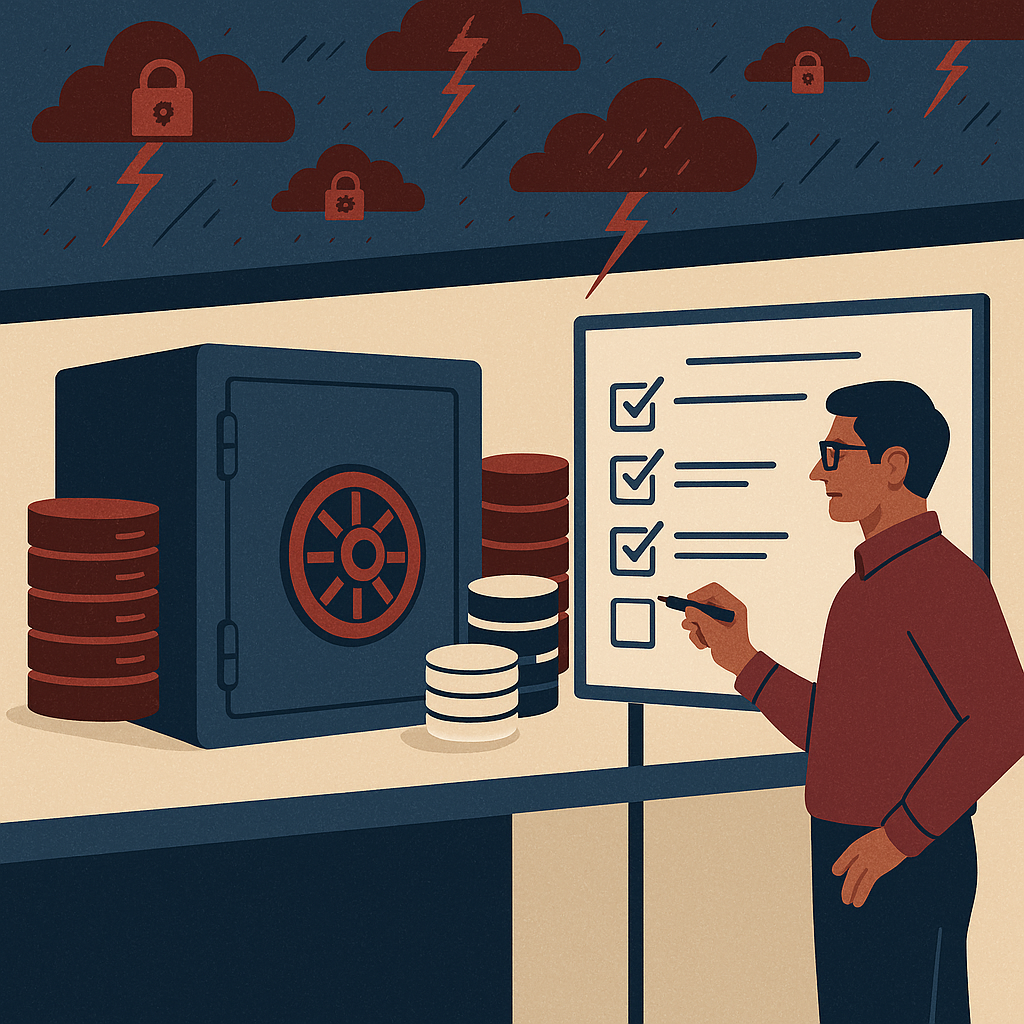

ECM buyer's guide 2026 — a features checklist and vendor question framework for Indian enterprises evaluating enterprise content management platforms. India compliance fit, deployment options, TCO, and evaluation pitfalls.
ECM evaluations fail in predictable ways. The shortlist is assembled based on analyst rankings or colleague recommendations. The demos are evaluated on feature counts. A vendor is selected based on the smoothest sales process. And 12 months later, the system is live but not adopted — because nobody asked whether it could handle CKYC integration, whether the workflows could be configured without IT, or whether the India support team could respond during an audit crisis.
This guide is structured to prevent those failures. It covers the features that actually matter, the India-specific criteria that global analyst rankings ignore, and the questions that separate capable platforms from capable sales decks.
Where to Start — Define Your Use Cases First
Before evaluating any platform, your team needs to agree on the 3–5 use cases that are non-negotiable — the workflows that must work from day one. Common starting points for Indian enterprises:
- KYC and CKYC workflows — for banks, NBFCs, and financial services
- SOP and quality document control — for manufacturers, pharma, and healthcare
- Contract lifecycle management — for legal, procurement, and commercial teams
- Invoice and AP workflow automation — for finance teams processing high invoice volumes
- HR document governance — for employee file management with retention and access control
Use case clarity prevents scope creep in demos and prevents vendors from showcasing features that are impressive but irrelevant to your actual needs.
ECM Features Checklist — What to Evaluate
| Feature Category | Must-Have Capability | Evaluation Test |
|---|---|---|
| Document storage | Centralised repository with metadata, folder structure, and full-text search | Search for a specific document using only business context (no filename) |
| Version control | Check-in/out, major/minor versioning, approval before publishing, supersession | Attempt to edit a checked-out document as a different user |
| Access control | Role-based access, folder-level permissions, least-privilege enforcement | Create two users with different roles — confirm access boundaries |
| Workflow automation | Multi-step approvals, SLA alerts, escalation, conditional routing | Configure a 3-step approval workflow without IT help — time how long it takes |
| Audit trail | Complete, tamper-evident log of all document events | Ask: can an administrator delete audit trail entries? |
| Retention management | Policy-based retention, legal hold, disposition workflow | Demonstrate a document being placed on legal hold and the retention schedule pausing |
| AI / IDP | Document classification, field extraction, AI search | Upload a sample Indian invoice — test extraction accuracy on GSTIN, amount, vendor name |
| Integration | ERP, HRMS, email, and India-specific systems (CBS, CERSAI) | Ask for a reference customer using the same integration you need |
India-Specific Evaluation Criteria
These criteria are rarely on global analyst scorecards but are frequently the difference between a successful and a failed India deployment:
Questions to Ask Every ECM Vendor
- "Show me a customer in my industry in India — can I speak with them?" A reference customer in a similar Indian regulatory context is worth more than any feature demo.
- "Can a business user configure a new approval workflow without IT?" If the answer requires a developer, every workflow change will be delayed and expensive.
- "Can an administrator delete audit trail entries?" If yes, the audit trail is not tamper-evident — it is a log that can be manipulated.
- "What is the realistic go-live timeline for our industry, user count, and use cases?" Not the best-case demo timeline — the typical timeline including data migration, UAT, and training.
- "What does your year 3 total cost look like with 2x users and 5x documents?" Growth pricing is the real cost of an ECM. The starting price is just the entry point.
- "What happens to our data if we decide to switch vendors?" Data portability and export formats should be defined in the contract before you sign.
- "How do you handle CKYC and Aadhaar masking for banking customers?" For regulated financial entities, this is not optional. If the answer is "we can build that," move on.
What We See in Practice
The second pattern: evaluations that run for 6+ months without a decision because the criteria keep expanding. The discipline is to evaluate against your 3–5 defined use cases only — not against an exhaustive feature list. Everything else can be configured or added later. What cannot be retrofitted is India data residency, CKYC integration, or a support SLA that works in your time zone.
For detailed industry-specific requirements, see our solutions for Banking and Insurance, Manufacturing, and Healthcare.
FAQ
Compare Plans and Get a Quote
ShareDocs is India's purpose-built ECM — with native CKYC automation, Aadhaar masking, RBI-compliant audit trails, and INR pricing. Free trial available.
Compare Plans and Get a Quote Start Free TrialShareDocs Enterpriser is India's most trusted ECM platform — purpose-built for Indian regulatory requirements with native CKYC automation, Aadhaar masking, and India data residency. 300+ enterprises. ISO 27001 certified.
Last Reviewed: May 2026 | Category: ECM Buyer's Guide | Visit ShareDocs FAQ or contact our team.